Thursday, 8 December 2011
Future of Mocap
From my research i have learned by conducting basic searches and by watching many videos on Youtube that Motion capture has a future of being more realistic and more accurate. There will be more sensors and advance technology to make the person look real and carry all the realism of a proper person such as wrinkles and any dimples. The people already look realistic however the technology will drive to improve reality. I also found that the next mission for people who control this technology want to make the surroundings of Mo cap more realistic such as the place that a shot is being taken place. They also want to increase the number of people that are able to be in one shot. Next they want to increase the speed of the technology as they don't want to get to a point when the technology can not get better.

Motion Capture
After conducting extensive research into Mo Cap (motion capture) i have learned that this technology is used in many fields, gaming, films (Avatar is a good example of MoCap), Computer animations. In basic terms Motion Capture technology is like acting, everything in the game, film or animation is acted out in a technical environment. The person who is acting the scene or game out will have many dots all over their body and they act as sensors, these will get computerise the actions that are acted out by the actor.

This picture is is a person in a MoCap suit, as you can see that he has the sensors all over him, everyone who is acting out has to wear this special suit.

This is Avatar, this film is completely based on Mo cap, as you can see this is Mo cap taken to its full potential, all this equipment had to be tested many times before this film could be shot. The equipment used for this amazing film is all valued at million of dollars. The had a budget of $300 million dollars, and also it could be viewed in 3D.
This picture is is a person in a MoCap suit, as you can see that he has the sensors all over him, everyone who is acting out has to wear this special suit.
This is Avatar, this film is completely based on Mo cap, as you can see this is Mo cap taken to its full potential, all this equipment had to be tested many times before this film could be shot. The equipment used for this amazing film is all valued at million of dollars. The had a budget of $300 million dollars, and also it could be viewed in 3D.
Advantages and disadvantages of MoCap....
Advantages
Motion capture offers several advantages over traditional computer animation of a 3D model:
- More rapid, even real time results can be obtained. In entertainment applications this can reduce the costs of keyframe-based animation. For example: Hand Over.
- The amount of work does not vary with the complexity or length of the performance to the same degree as when using traditional techniques. This allows many tests to be done with different styles or deliveries.
- Complex movement and realistic physical interactions such as secondary motions, weight and exchange of forces can be easily recreated in a physically accurate manner.
- The amount of animation data that can be produced within a given time is extremely large when compared to traditional animation techniques. This contributes to both cost effectiveness and meeting production deadlines.
- Potential for free software and third party solutions reducing its costs.
Disadvantages
- The cost of the software, equipment and personnel required can potentially be prohibitive for small productions.
- The capture system may have specific requirements for the space it is operated in, depending on camera field of view or magnetic distortion.
- When problems occur, it is easier to reshoot the scene rather than trying to manipulate the data. Only a few systems allow real time viewing of the data to decide if the take needs to be redone.
- The initial results are limited to what can be performed within the capture volume without extra editing of the data.
- Movement that does not follow the laws of physics generally cannot be captured.
- Traditional animation techniques, such as added emphasis on anticipation and follow through, secondary motion or manipulating the shape of the character, as with squash and stretch animation techniques, must be added later.
- If the computer model has different proportions from the capture subject, artifacts may occur. For example, if a cartoon character has large, over-sized hands, these may intersect the character's body if the human performer is not careful with their physical motion.
Friday, 2 December 2011
Research: Playstation Move Ping Pong
This video shows the Ping Pong game that is available on PS3 Move
Avatar: Motion Capture
This video shows that you can make whole films using Mo Cap (Motion Capture) this shows how this technology can be used to its fullest.
Motion Capture
This video shows how Motion Capture works and it demonstrates the realism that the technology can achieve
Thursday, 1 December 2011
Lighting Principles
Main Light
Main light is the strongest. It is set up first, 45 degrees away from the camera. The rest of the flash lights are subject to the main light.
Main light is the strongest. It is set up first, 45 degrees away from the camera. The rest of the flash lights are subject to the main light.
The main light defines:
- size and shape of an object
- color or mode (black and white photo) 3
- persistence of shadows which play an important role in creating an impression of a dimension
- shape and size of the bright surfaces
- contrast of the shadows (strong, medium or soft shadow)
The right exposure is defined according to the main light.
Front Light or Fill light
Front light is set on the opposite side of the main light. It controls a shadow density. To reduce the strength of the shadows we use light reflectors. Advisable is to make sure that the main and the fill light do not have the same intensity because in that case the object on the photograph will not have any shadows. Generally, that's not the desirable effect. Contralight It's used to accentuate hair. It also separates the model from its background and the object itself gets more of a volume to it.
Front light is set on the opposite side of the main light. It controls a shadow density. To reduce the strength of the shadows we use light reflectors. Advisable is to make sure that the main and the fill light do not have the same intensity because in that case the object on the photograph will not have any shadows. Generally, that's not the desirable effect. Contralight It's used to accentuate hair. It also separates the model from its background and the object itself gets more of a volume to it.
Background Lighting
Sometimes it's necessary to light up the area behind the object. To do so we use a background light. If the object of interest and the background are the same color, background light can help highlight the shape of the object itself. When setting up any kind of lighting (photo or video) it’s important to follow a few specific steps.
Sometimes it's necessary to light up the area behind the object. To do so we use a background light. If the object of interest and the background are the same color, background light can help highlight the shape of the object itself. When setting up any kind of lighting (photo or video) it’s important to follow a few specific steps.
First, set up the main light, then the fill light, and at the end, the background light. It’s done this way because if we would turn on all the lights at the same time, we would not be able to recognize which light is dropping which shadow. An affect like that is called a "stadium" effect.
When setting up the lights make sure to place them behind the camera to avoid its shadow falling on to the object of interest. The further the light is the weaker it gets and its strength falls each square distance so the exposure needs to be longer. That means: If for one meter distance the exposure needs to be one second long then for twice longer distance the exposure should be four times longer, for three times longer distance the exposure should be nine times longer and so on…
Production Log on lighting....
Today we went out with Andy and he demonstrated to us how we should use lighting outdoors to enhance our image to make them look like a proffessional stadard. The camera we used was a Cannon also we used one light with a reflector. we learned that our light is coming from one side and to light the other side of the face we could use a reflector to bounce back the light. We also were taking shots to use the natural light to our advantage.


These are some of the shots we had taken.....
Camera Settings
In this session we went through the basic camera principles, if you get these basic settings right in all of your shots then you will deffinatly get your desired effect that you are hoping to get. The main few settings are ISO, Shutter speed, Apperture and finally Focus i will be going into these in more detail.
What is ISO?
ISO is the amount the camera is sensitive to light, the setting of ISO should be down to the enviroment that you are shooting at, this could be a dark or bright enviroment. if you have a 100 ISO then your camera is less sensitive to light however if you have a 3200 ISO your camera will be very sensitive to light, that is how people use light to draw a picture as this will make your shutter speed long aswell.

This image has been taken to demonstrate ISO, the left one has been taken at 100 ISO you can see that it is a much darker image as it is at a low ISO, However the other image on the right is of a much higher ISO 3200 to be exact and it is a much sharper and brighter image, however if you look closer the image goes a little bit grainy. so you should be careful when you are shooting to get a specific effect as something such as a grainy picture may ruin your shot, before setting your camera to get a desiredd shot you must have a rough idea of what type of image you will get out of that particular setting.
What is Shutter speed?
Shutter speed is the amount of time the shutter of the camera is open, if your shutter speed is open for "1s" this is 1 second then the shutter is open for 1 second while that shutter is open light passes through the lense, the longer the shutter is open the more light passes through the camera, the quiker the shutter speed the less light that passes through. These are some of the shutter speeds.
1/1000 s
1/500 s
1/250 s
1/125 s
1/60 s
1/30 s
1/15 s
1/8 s
1/4 s
1/2 s
1 s
These are some of the effects you can achive by playing with the shutter speed of your camera.


As well as to make light drawings using a longer shutter speed also is frequantly used in motorsport, the reason it is used in this is because it puts speed and motion into the shot, this goes to show that just because it is an image doesn't mean you can't have motion init.

What is Apperture?
Apperture is depth of feild, the lower the F number as Apperture is mesured in F numbers/F stop the lower the value of F stop the more light let into the camera, and the higher the F stop value the less light let in. Once you master apperture you can achieve many proffessional effects. If you keep you apperture high depending on evviroment and you subject fairly close to the camera you can achieve a blurey background effect, this is good when you have a sandy and sea background.
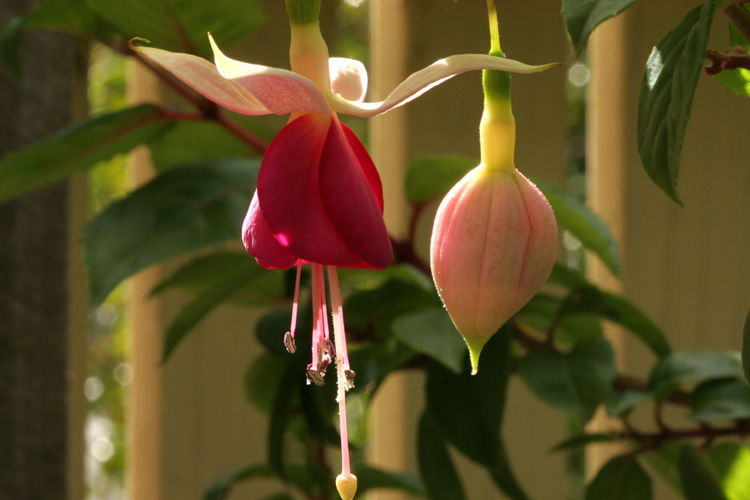

As you can see from these two pictures you can achieve some great proffessional effects by using thiss setting to its full potentional, with mastering this you can get really creative and let your imagination use this with in your own work.
What is Manual/Auto Focus?
Manual/Auto Focus basically is a simple function on a camera which if you have on the auto focus mode, it will focus automatically, however you can choose to focus your self manually. Most of the time Auto Focus does all the work, however if you are doing portraits, working in low light enviroment, shooting out of glass or shooting action you should use manual focus. By getting the focus right you make sure the camera always gets the subject and it makes sure it is in detail.
Subscribe to:
Comments (Atom)